Seasonal Anthems: What to Sing at Bonfire Night and New Year's Eve
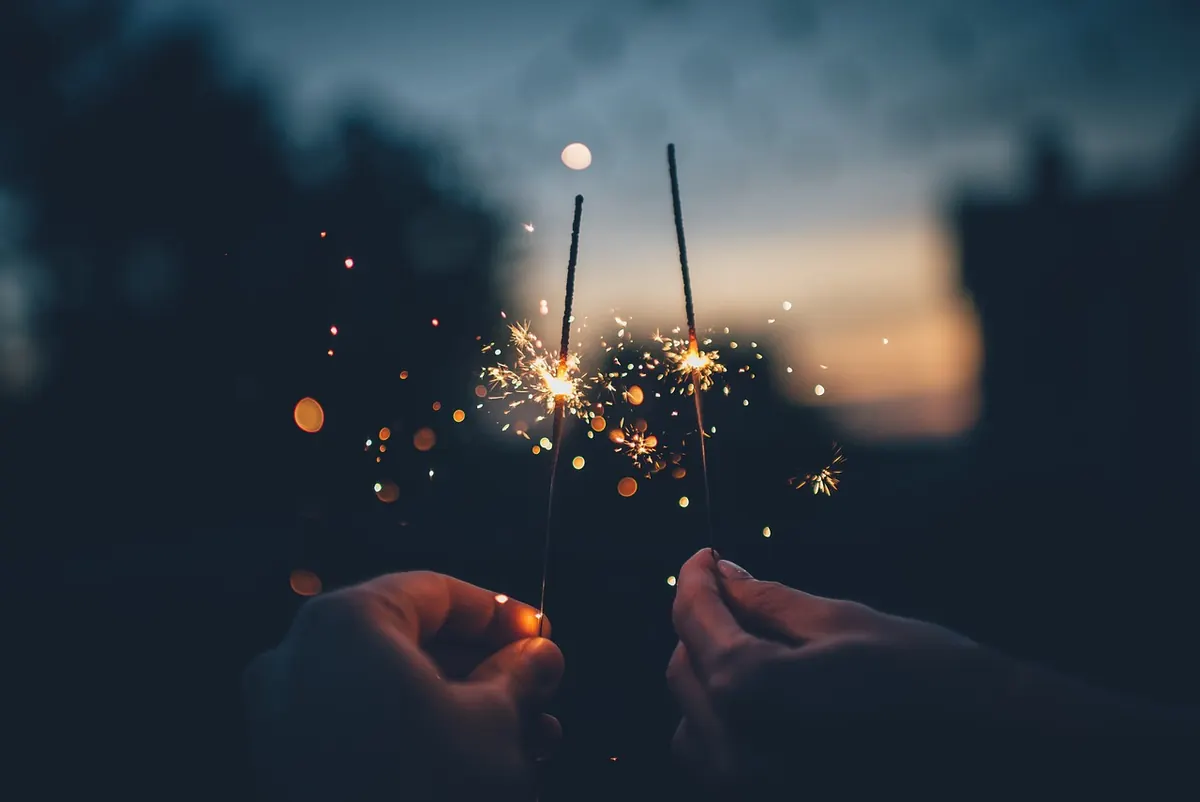
Some nights come with their own soundtrack. A match struck over a pile of pallets on a cold November evening. The last ten seconds of the year, counted out loud by people who only half know each other. Singing is what turns a gathering into an occasion — and the right song at the right moment beats a bigger box of fireworks.
Here's what to sing, when to sing it, and how to get a room to join in without a rehearsal.
Why communal singing lands on these nights
Bonfire Night and New Year's Eve are built around one shared moment: a fire lit, a clock striking twelve. Everything before it is waiting. Song fills that waiting better than small talk, and it gives people a reason to stand close together in the cold.
The songs that work are rarely the clever ones. They're the ones everyone half-knows — a chorus you can pick up in eight seconds, a line you can shout, a tune that sits in the range of someone who has never sung outside a car. Volume matters more than accuracy.
There's a practical upside, too. You're standing in a wet field in November, or a back garden at midnight in December. Singing keeps hands busy and feet moving while somebody wrestles with the barbecue.
Bonfire Night: songs for the fire
Bonfire Night has the oldest songbook of the lot, and it's short. Children still chant it: "Remember, remember, the fifth of November, / Gunpowder, treason and plot." The longer version — "Please to remember / The fifth of November" — does the rounds in playgrounds and at the front of processions. Let the children lead that one. It's a chant, not a melody, and it needs no help.
After that, the theme writes itself. Fire songs work because everyone can shout the title line, and a bonfire is a forgiving audience:
- "Light My Fire" — The Doors. One long chorus, easy to hold.
- "Ring of Fire" — Johnny Cash. Better after a drink, sung low and slow.
- "Great Balls of Fire" — Jerry Lee Lewis. Short, loud, over in two minutes.
- "Disco Inferno" — The Trammps. The "burn, baby, burn" line does all the work.
- "Fire" — Kasabian. The one the teenagers will actually sing.
- "Firework" — Katy Perry. Save it for the finale.
Four or five is plenty. Start with the one everybody knows and save the rest for the drive home. If you live somewhere with a strong bonfire tradition — Sussex and the West Country keep their own processions and societies — learn one local song properly rather than guessing at three.
New Year's Eve: the countdown and after
New Year's Eve has no fixed repertoire until the bells, which is the problem. From about eleven o'clock the room is looking for something to do. This is where the singalong standards earn their keep: "Sweet Caroline", "Hey Jude", "Country Roads", "Come On Eileen", "Angels", "Don't Look Back in Anger". Choruses that arrive early and keep coming back.
If you want a theme, keep it loose — songs from the year just gone, a soul hour, a '90s run — but don't let the theme stop you playing the one everyone actually wants.
Auld Lang Syne
At midnight, everything stops and starts again with the same song. Burns sent a version of "Auld Lang Syne" to a friend in 1788, drawing on older fragments, and it has been the sound of the bells ever since — Hogmanay, a wedding, the last night of a holiday camp.
Conventions vary by family and by country: crossed arms, hands joined in a circle, a turn to face the middle on the final verse. Choose one before midnight and tell people what you're doing. The only rule worth keeping is that everyone joins in. If you only know the first line, hum — a room of people humming the same tune sounds far better than a room standing in silence.
After the bells
"Fairytale of New York" is the guaranteed shout-along, though it's worth checking who's in earshot before the second verse. "The Parting Glass" suits a Scottish gathering. "Rockin' All Over the World" and "New York, New York" close more parties than anyone would admit. In Scotland the singing usually carries on into first-footing — someone dark-haired at the door with coal, shortbread or a bottle — and starts again in the kitchen.
A note on what not to sing
Two things to avoid. The first is anything tied to a religious or political divide. Bonfires bring together people who disagree about plenty already, and there's no reason to hand anyone an argument. Street songs with a sectarian history don't belong at a shared community event, however rousing they are.
The second is jokes that only work for one corner of the room. Topical songs about the government or the year's big news get a laugh once and split the crowd the rest of the time. Be funny in the introduction instead. And if you're printing words, proofread them — a misheard lyric in 16pt is hard to live down.
One practical point: if your event is public or ticketed, ask the venue about their music licence rather than assuming it's covered. A party in a front room is a different matter.
The rest of the calendar
- Burns Night, 25 January. "A Man's a Man for A' That", "My Luve is Like a Red, Red Rose", and "Auld Lang Syne" to finish with hands joined.
- St David's Day, 1 March. "Hen Wlad Fy Nhadau" is the anthem, but "Calon Lân" is easier to teach a room and lands just as well.
- St George's Day, 23 April. "Jerusalem" and "Land of Hope and Glory". Parry's setting of Blake's poem turns up in more places than people expect.
- Last Night of the Proms, September. "Rule, Britannia!", "Jerusalem" and the hornpipe from the Fantasia on British Sea Songs. Loud, predictable, better for it.
- Remembrance Sunday, November. Not a singing occasion. If the service has hymns, sing them; otherwise keep quiet and mean it.
How to lead a singalong people join in with
- Pick a singable key. Most people are comfortable around C, D or G. If the original sits high, drop it.
- Print the words. Two sides of A4 at most, large type, chorus written out at the top.
- Start with the chorus. Teach the hook, then the verse, then repeat. Two rounds and the room has it.
- Nominate a starter. One person who knows the tune and can hold a note long enough to pull everyone else in.
- Cut mercilessly. Three verses is plenty. Repetition is the point.
- Bridge the gaps. The silence between songs kills more singalongs than bad singing does. Have the next one ready.
Making it work on the night
Take more song sheets than you think you need, plus a torch or two for anyone reading outdoors. Stand somewhere people can see your face — a low wall, a bench, the back of a trailer — and keep your hands free.
Don't start the big singalong too early. Bonfire Night works best once the fireworks are done and people are drifting towards the fire. New Year's Eve peaks between eleven and midnight, then again after the bells.
And know when to stop. One song everyone sings properly is worth more than three that fade out halfway through. Finish on a high, and keep the rest of the list for next year.
Photo: Pexels / Pixabay